

Civet
“Warm, skin-like and a little wild. Makes flowers glow.”
Read more: en.wikipedia.org
Civet: The Beautiful Animalic Soul of Perfumery, and Why I Chose to Create My Own
There are certain aromatic materials in perfumery that possess a beauty so unusual that the human nose initially struggles to understand them. Civet is perhaps one of the most extraordinary examples. I have always believed that the most fascinating ingredients are not necessarily those that smell pleasant the moment we encounter them. Sometimes, the finest materials are the ones that challenge our understanding of what beauty is supposed to smell like. Natural civet, historically obtained from the glandular secretion of civet animals, possesses an intensely animalic, warm, musky and occasionally faecal character when encountered in its concentrated form.
To an inexperienced nose, it can be rather alarming. There is something reminiscent of warm fur, old leather, human skin, an almost indolic floral heaviness and a peculiar sweetness concealed beneath the more aggressive notes. But dilution changes the entire conversation. What initially appeared unpleasant can gradually reveal a remarkable softness, almost a velvety warmth that makes floral materials feel more sensual and considerably more alive. I find this transformation fascinating because civet is not simply a material that makes a perfume smell animalic. At its most sophisticated, it can make a fragrance feel almost human. The principal characteristic odorant of natural civet is civetone, a macrocyclic ketone containing a seventeen-membered ring, although the complete smell of the natural secretion arises from a far more complicated mixture of aromatic constituents.
Civetone contributes a beautiful warm, musky and softly animalic character, while other compounds, including indolic and related substances, contribute to the more provocative aspects of the natural material. What interests me most is the extraordinary contrast between the concentrated secretion and the impression it can create within a finished perfume. A tiny animalic nuance can make an otherwise innocent jasmine feel almost dangerously sensual. Rose can acquire the warmth of skin, while a powdery floral composition can develop a depth that is difficult to achieve through sweet musks alone. I have always felt that civet possesses an almost mysterious ability to blur the boundary between the smell of a perfume and the natural warmth of the person wearing it.
It is not merely musk, nor is it simply an unpleasant animalic note disguised beneath flowers. It is something more complicated, a remarkably intimate aromatic character that seems to remind us that perfume was never intended to exist independently of the human body.
The history of civet in perfumery stretches across centuries and several different aromatic cultures, long before the establishment of the modern European perfume industry. Natural civet was historically prized in parts of Africa, the Middle East, South Asia and Europe, where its powerful scent and remarkable persistence made it valuable in aromatic preparations. In India, animalic substances such as civet formed part of certain historical fragrance and ritual traditions, although their cultural uses varied considerably across regions and periods. The material was especially important because perfumers discovered that something almost unbearably pungent in concentration could become extraordinarily beautiful when incorporated in very small quantities into a larger composition.
Natural civet was traditionally collected from the perineal glands of animals such as the African civet, Civettictis civetta. These secretions play a role in the animal's natural scent-marking behaviour, but their historical commercial collection frequently involved keeping civets in captivity and repeatedly harvesting the material. I find this part of its history impossible to separate from the artistic discussion. We can admire the olfactory contribution of a material while questioning the practices through which it was obtained. The scientific development of civetone provided an important turning point. During the early twentieth century, the pioneering work of Leopold Ružička and other chemists helped establish the molecular structure and synthetic possibilities of large-ring musk odorants.
Civetone became one of the great examples of how advanced organic chemistry could reproduce a significant aspect of a naturally occurring animalic fragrance without requiring the original animal secretion. For someone with my background in chemical engineering, this achievement is particularly meaningful. We often hear people speak about synthetic aroma molecules as though they represent a departure from the authenticity of perfumery. I see this rather differently. Chemistry allowed us to understand the molecular foundations of an extraordinary natural smell and eventually gave us the freedom to recreate aspects of that smell through controlled synthesis.
It did not eliminate the need for artistic judgement, because a single civetone molecule cannot represent every dimension of natural civet. But it created a new possibility. The perfumer could begin separating the beauty of the aroma from the historical necessity of obtaining it from an animal. To me, that represents one of the most important developments in the evolution of modern perfumery.
If we examine the great perfumes of the twentieth century, the importance of civet becomes particularly apparent in the development of floral aldehydic compositions, animalic chypres and rich oriental fragrances. Guerlain's Jicky, introduced in 1889, belongs to the early tradition of combining aromatic freshness with a distinctly sensual foundation, demonstrating how the emerging vocabulary of modern perfumery could embrace both botanical refinement and animalic warmth. Guerlain's Shalimar, introduced in 1925, remains another magnificent reference for understanding the relationship between rich balsamic materials, vanilla, powdery textures and intimate animalic impressions.
I have always admired how such compositions can feel extraordinarily luxurious without depending entirely upon obvious sweetness. Another important example is Chanel N°5, created by Ernest Beaux and introduced in 1921. The historical fragrance became celebrated for its remarkable floral-aldehydic structure, while civet belonged to the broader animalic vocabulary associated with classical interpretations of this style. Historical research has documented that Chanel eventually replaced natural civet with a synthetic alternative, illustrating the changing relationship between traditional animal-derived materials and modern perfumery. Yet we should not assume that every current version of a historical fragrance contains the same ingredients as its earliest formulations.
Formulas evolve, regulations change and the fragrance industry's understanding of materials continues to develop. What interests me is the artistic lesson these compositions offer. Civet was never merely an ingredient used to make perfume smell dirty. In the hands of a skilled perfumer, it could give an abstract floral composition an almost physical presence. It could make jasmine feel warmer, rose feel more intimate and an otherwise polished perfume acquire an extraordinary sense of depth. Consider the difference between smelling a magnificent bouquet of flowers in a vase and encountering the same fragrance upon warm human skin. The flowers may be identical, but the emotional experience can be entirely different.
This is the territory that civet helped perfumers explore. It introduced a small element of animalic imperfection into compositions that might otherwise have become excessively immaculate. And I believe some of the greatest achievements of classical perfumery came from precisely this understanding: that an extraordinary perfume does not always become beautiful by removing every strange or uncomfortable aspect. Sometimes its beauty emerges because those challenging elements have been given exactly the right place.
In my own laboratory, I made a deliberate decision to create my own vegan civet accord rather than use natural animal-derived civet, and this decision represents something fundamental about the philosophy of Perito Moreno. I have never believed that a perfumer must use an animal secretion merely because the material possesses a magnificent historical reputation. My interest lies in understanding the aroma, identifying the relationships that make it extraordinary and finding a way to interpret those relationships through my own palette of ingredients. I wanted my civet accord to possess warmth, sensuality, a subtle animalic darkness and the almost magnetic intimacy that makes classical civet so fascinating, but I did not want the animal itself to become part of the raw-material supply chain.
More importantly, I did not want to create a simplistic interpretation by taking a single commercially available civetone material and declaring the exercise complete. Natural civet is considerably more complex than one molecule, and a beautiful reconstruction must consider the relationships between musky warmth, indolic darkness, delicate sweetness, woody softness and the almost leathery character that emerges within the finished composition. This is where my fascination with unusual Indian botanical materials became particularly important. One of the distinctive elements I chose to incorporate into my own civet accord is Bakula Bark, obtained from Mimusops elengi, a tree deeply connected to the botanical heritage of the Indian subcontinent.
Bakula is widely admired for its fragrant flowers, but I became interested in exploring the aromatic possibilities of its bark, a much less familiar subject within fine perfumery. I did not approach Bakula Bark as though it were naturally equivalent to civet. It is not, and I would never make that claim. Instead, I explored the possibility of introducing a botanical character into an animalic reconstruction, allowing the accord to possess an individuality that came from my own understanding of raw materials rather than from copying a conventional commercial civet base. In my approach, the bark contributes to a broader relationship between woody, botanical and musky impressions, while carefully chosen vegan aroma molecules establish the more recognisable civet-like warmth.
Modern musks, selected animalic materials of non-animal origin and restrained floral nuances allow me to shape the accord without depending upon the natural secretion. The precise relationship between these ingredients is part of my proprietary work, and I prefer to keep that formula within my laboratory. What matters to me is the artistic principle. I am not interested in replacing one expensive ingredient with something cheaper and calling that innovation. I am interested in creating a distinctive aromatic interpretation that reflects my own fascination with Indian botanicals, extraction chemistry and classical animalic perfumery. The inclusion of Bakula Bark is particularly meaningful because it allows an ingredient rooted in our own botanical landscape to participate in an olfactory tradition that has historically depended upon animal materials.
To me, that is a far more interesting creative achievement than simply reproducing the smell of a conventional civet base. It is not merely an imitation. It is my own interpretation of what civet can become when approached through the philosophy of vegan artisanal perfumery.
My personal fascination with civet has taught me something rather important about the relationship between beauty, ethics and originality. I have spent years studying aromatic materials, and the more deeply I understand them, the less interested I become in the idea that the authenticity of a perfume can be measured by how rare, expensive or controversial its ingredients happen to be. There is no denying the extraordinary beauty of classical animalic perfumery. I admire the great floral compositions of the past, the magnificent chypres, the powdery ambers and the sensual fragrances in which a carefully controlled animalic note seems to give the entire composition a heartbeat.
But I do not believe that admiration obliges me to reproduce every practice associated with their creation. In fact, I find the challenge of constructing a convincing vegan civet accord considerably more artistically rewarding. It requires me to examine what makes the original material beautiful rather than simply relying upon its historical reputation. It forces me to separate the unpleasant opening from the intimate warmth, the indolic darkness from the floral sensuality and the recognisable animalic character from the deeper impression of human skin. And then it asks me to rebuild these relationships through materials that reflect the philosophy of my perfume house.
Bakula Bark holds a special place in this process because it represents my belief that India's botanical diversity still possesses extraordinary possibilities that contemporary perfumery has barely begun to explore. I find something deeply satisfying about the idea that a tree known to generations of Indians can contribute its own identity to a modern interpretation of one of perfumery's most historically animalic materials. Of course, a vegan civet accord should not be judged merely by the claim that no animal-derived secretion was used. It must also be beautiful. It must have depth, elegance, sensuality and the ability to interact meaningfully with other ingredients.
Otherwise, the ethical decision may be admirable, but the artistic work remains unfinished. I want my compositions to be judged by their smell, by the intelligence of their construction and by the emotions they are capable of creating. To enthusiasts who believe that natural civet possesses an irreplaceable complexity, I respect that perspective. Natural materials often contain an extraordinary range of constituents, and a reconstruction need not be chemically identical to deserve serious consideration. My objective has never been to erase the history of civet or pretend that chemistry and nature are interchangeable. My objective is to create something beautiful that carries forward the most fascinating aspects of that history while expressing my own artistic identity. I have always believed that the soul of a perfume does not reside in the suffering, rarity or extravagance associated with obtaining its ingredients.
It resides in the imagination of the perfumer and the beauty of the composition itself. My civet accord is therefore more than an attempt to recreate an animalic smell. It is my belief that we can preserve the sensuality of classical perfumery, celebrate the extraordinary botanical wealth of India and allow a fragrance to possess a beautifully wild soul without asking an animal to surrender its freedom.
Artisan Dixit · Perfumer & Founder, Perito Moreno
Perfumes with civet

Thumri
Rose and musk. Romance, sung slowly.

Elite
Mandarin, jasmine, a thread of honey.

Parijat
Night-blooming parijat over aged civet.
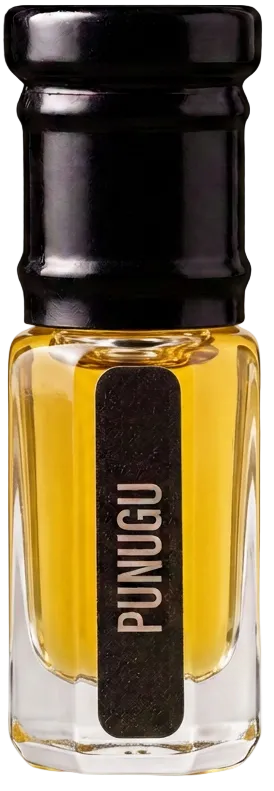
Punugu
The Fragrance of a Sacred Teeka