Tulsi (Indian basil)
“Green and spicy, with a warm clove note. Smells of home.”
Read more: en.wikipedia.org
Tulsi: The Green Fire That Runs Through Rising Mysore and Regal Silhouette
There are certain ingredients that smell immediately beautiful, and then there are ingredients that make a fragrance beautiful by introducing a little tension. Tulsi belongs to the second category, and perhaps that is why I find it so fascinating. Most Indians know its fragrance intimately, yet very few would immediately associate it with sophisticated fine perfumery. Crush a few fresh Tulsi leaves between your fingers and the first impression is wonderfully alive. There is a sharp, green freshness, something almost peppery, followed by the unmistakable warmth of clove, a faint camphoraceous brightness and a peculiar aromatic bitterness. It is not the cheerful, juicy greenery of freshly cut grass, nor the soft sweetness of ordinary basil.
Tulsi possesses a certain seriousness. It can smell cooling and warm almost simultaneously, and that contradiction becomes extraordinarily useful when composing a perfume. Depending upon the variety and chemical composition, the fragrance may lean towards clove, sweet herbs, aromatic woods or a slightly medicinal freshness. To my nose, its beauty lies in this imperfect relationship between greenery and spice. It does not smell polished. It smells like a living plant, and I have always believed that a little botanical imperfection can give a perfume considerably more character than an overdose of perfectly pleasant ingredients.
I am particularly interested in Tulsi because it offers a form of freshness that does not depend entirely upon citrus. Bergamot provides luminosity, lemon introduces sharpness, and mandarin contributes sweetness, but Tulsi introduces something more textured. It has a green, almost bitter opening that gradually reveals a warm, clove-like character, especially in eugenol-rich qualities. That transition can be quite beautiful beside lavender, neroli, jasmine and aromatic spices. It is also the reason I would never use Tulsi merely as a decorative Indian ingredient. The actual smell must earn its place within the formula. A little too much and the composition can begin resembling an herbal preparation.
Too little and its interesting personality disappears altogether. But when the balance is correct, Tulsi can make citrus feel more natural, flowers feel less ornamental and spices feel as though they are growing from the same botanical landscape. What interests me is not making people identify Tulsi immediately. I am much more interested in making them wonder why the opening feels so beautifully alive. There is a considerable difference between a perfume that smells of several ingredients placed together and one in which those ingredients appear to belong together. Tulsi can be a wonderful part of creating that relationship.
In Rising Mysore, which I created during my journey with Dixit & Zak Fragrances, Tulsi occupied a particularly interesting position within the aromatic opening. The composition brought together Hatkhora lime, Italian lavender, Jasmine Sambac and a bright arrangement of citrus and spices before moving towards its richer woody and sandalwood character. What fascinated me was the contrast between Hatkhora's unusual citrus brightness and Tulsi's darker, herbal warmth. The citrus wanted to sparkle, while the Tulsi introduced a certain resistance to that brightness. Lavender brought a classical aromatic elegance, and Jasmine Sambac introduced its familiar sensual floral richness.
Together, these materials created an opening that was neither a conventional citrus cologne nor a straightforward Indian spicy fragrance. I wanted that initial freshness to possess character, to feel unmistakably aromatic without becoming medicinal, and to prepare the nose for the warmer structure that followed. Tulsi was particularly interesting within this relationship because its clove-like and green facets could connect the sparkling materials above with the deeper spicy and woody impressions below. As the composition developed towards patchouli, incense and sandalwood, the initial herbal sharpness belonged to the memory of the opening rather than remaining a dominant standalone note.
This is an aspect of perfume construction I find immensely satisfying. An ingredient does not necessarily have to remain obvious throughout the fragrance to justify its presence. Sometimes its most important function is to establish the direction in which the entire composition begins to move.
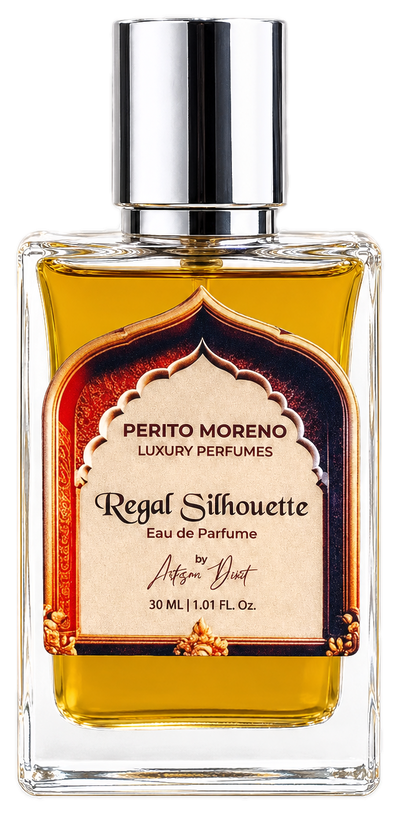
Regal Silhouette explores a similarly fascinating relationship between aromatic freshness and spice, although its published note structure identifies Indian Basil rather than specifying the exact botanical extract. The fragrance opens with a beautiful arrangement of Indian lemon, sweet lime, Nagaland wild lemon, neroli, lavender, Jasmine Sambac, marigold, chamomile, pink pepper and Indian Basil. It is a considerably more elaborate aromatic conversation, with multiple kinds of citrus brightness, floral softness and herbal sharpness occupying the same space. What interests me in this architecture is how a basil character can prevent the opening from becoming merely sparkling and decorative.
Neroli possesses a delicate green floral elegance, lavender contributes aromatic composure, and the different citrus materials provide their own personalities. Against these, an Indian basil nuance introduces a more assertive botanical quality. As the fragrance develops, the warmth of clove, pimento, cardamom, cinnamon, rosemary and bay leaf begins taking over. I find the relationship between the green opening and that spicy heart particularly beautiful. There is a sense that the fragrance gradually becomes warmer without losing the aromatic identity established at the beginning. Eventually, sandalwood, incense, myrrh, labdanum and patchouli introduce a deeper, more substantial foundation.
What matters to me is the transition. Rather than presenting citrus, spices and woods as three unrelated chapters, I want the fragrance to possess continuity, with aromatic materials creating subtle connections between them. The Indian basil facet is part of that story, and Tulsi offers a particularly expressive reference for understanding this style of green, spicy warmth.
My affection for Tulsi is ultimately connected to a belief I have held throughout my journey as a perfumer: Indian aromatic ingredients deserve to be understood beyond their familiar cultural associations. Tulsi is often immediately associated with tradition, but I find its possibilities in modern fragrance construction considerably more interesting. It can make a citrus opening feel rugged rather than polished. It can introduce a faint clove-like warmth beneath a floral accord. It can create a beautiful conversation with lavender, rosemary and cardamom, or provide an unexpected green contrast against incense and sandalwood. In Rising Mysore, its aromatic personality helped establish the relationship between sparkling freshness and deeper warmth.
In Regal Silhouette, the Indian basil character belongs to a more elaborate movement from citrus and herbs into spices, resins and woods. These are two different ways of appreciating the same broad artistic principle: greenery can possess warmth, and spice can begin long before the obvious spices arrive. I would encourage fragrance enthusiasts to smell Tulsi alongside lavender, neroli, clove and sandalwood, then revisit these perfumes with particular attention to their openings and transitions. Do not look only for a clearly identifiable herbal note. Notice how the freshness changes character, how the spices emerge, and how the floral and woody materials begin relating to one another.
That is where the interesting work often happens. I have never wanted Tulsi to smell important merely because it is Indian. I want it to become important because of what its fragrance contributes. To me, its beauty is not simply in the leaf itself, but in that extraordinary moment when a little green bitterness meets a warm spice, and a perfume suddenly acquires a personality of its own.
Artisan Dixit · Perfumer & Founder, Perito Moreno