

Davana
“Dried figs soaked in wine, with a soft herbal edge.”
Read more: en.wikipedia.org
Davana: The Beautiful Madness of a Flower That Smells of Tobacco, Liquor and Forbidden Fruit
There are certain aromatic materials that I find beautiful because they possess a clearly recognisable personality, and then there is Davana, which seems to have absolutely no intention of being understood so easily. Botanically known as Artemisia pallens, this extraordinary Indian aromatic herb belongs to the Asteraceae family, yet its fragrance seems to borrow characteristics from several entirely unrelated botanical worlds. When I smell a beautiful Davana essential oil, I am fascinated by the almost impossible relationship between its fruity sweetness, herbal bitterness, floral warmth, tobacco-like darkness and an unmistakably boozy character.
Imagine the smell of ripe apricots and dried plums resting inside an old wooden cabinet, beside a glass of dark fruit liqueur and a small bundle of dried tobacco leaves. There is a warm, almost fermented fruitiness, but beneath it lies something green, bitter, medicinal and distinctly botanical. At certain moments, the fragrance appears almost floral, with a softness reminiscent of honeyed petals and dried flowers. Then, rather unexpectedly, a darker character begins emerging, something suggestive of cured tobacco, aged leather, warm hay and the faint sweetness of fruit preserved in alcohol. The booziness is particularly fascinating because Davana does not merely smell like ethanol or a conventional alcoholic beverage.
It possesses an impression of rich, macerated fruit, almost as though the fruit itself has been transformed by time. Some samples lean towards apricot brandy, others towards plum liqueur or a dark, syrupy fruit cordial. This is an olfactory description rather than evidence that the essential oil contains beverage alcohol. What fascinates me most is the relationship between these seemingly incompatible qualities. The fruity character prevents its herbal bitterness from becoming harsh, while the darker, tobacco-like facets keep the sweetness from turning childish. There is also an unusual floral intimacy that makes Davana feel surprisingly sensual. It is not a conventional white floral, nor does it possess the clean powderiness of orris.
Instead, it suggests the fragrance of petals that have been slowly warmed, dried and infused with something considerably more mysterious. To my nose, Davana is one of those rare natural ingredients that can smell simultaneously like a flower, a fruit, a herb and a beautifully aged spirit. It seems almost absurd that so many contrasting aromatic impressions can emerge from one small plant. But this is precisely what makes the material extraordinary. Davana does not simply offer the perfumer another smell. It offers an entire collection of personalities, and the real challenge is deciding which one deserves to speak.
The history of Davana is deeply connected to India, particularly the aromatic and horticultural traditions of the southern part of the country. Unlike many famous natural perfumery ingredients whose commercial identities were developed around European fragrance houses, Davana carries an unmistakably Indian botanical heritage. The aromatic herb has been cultivated and used in traditional floral decorations, garlands and ceremonial contexts, particularly in South India, where its distinctive fragrance has long been appreciated. What interests me is that its historical cultural importance and its modern commercial identity as an essential oil are two different chapters of the same story.
The plant was not created for the convenience of the fragrance industry. Its fragrance existed within a much larger relationship between cultivation, local traditions and the natural environment long before modern perfumers began discussing davanone percentages and chromatographic profiles. Davana oil is generally obtained through steam distillation of the flowering herb, and the resulting aroma can vary considerably according to cultivation conditions, harvest maturity, drying procedures and the details of distillation. The flowering stage is especially important. Scientific investigations have demonstrated that the proportions of characteristic constituents change as the plant progresses from the emergence of flower heads through full flowering and towards seed formation.
This is something I find enormously interesting as a chemical engineer. We often treat a natural essential oil as though it possesses one fixed aromatic identity, but a living plant is constantly changing its chemistry. The moment of harvest can influence the composition of the extract, and the extraction process can further alter what ultimately reaches the perfumer's bottle. Davana provides a particularly beautiful example because its chemistry includes a complex collection of sesquiterpenes, oxygenated compounds and aromatic esters. One of its best-known constituents is davanone, especially cis-davanone, although its concentration varies considerably between individual oils.
Other identified constituents include davana ether, bicyclogermacrene, linalool, caryophyllene oxide and certain cinnamic acid esters. A detailed analytical study published in 2008 reported approximately 45.8 percent cis-davanone in the particular Indian oil examined, alongside smaller quantities of several other constituents. But such a figure should never be treated as a universal specification for every Davana oil. Different origins, seasons and extraction conditions can yield very different results. More importantly, the complete aroma cannot be understood by looking only at the most abundant compound. Some components contribute directly to recognisable fruity or floral impressions, while others influence the character and physical behaviour of the essential oil in subtler ways.
This is why I have always believed that analytical chemistry and olfactory evaluation must work together. A gas chromatograph can tell me which molecules are present and in what approximate proportions. It cannot tell me whether a particular batch possesses the magnificent tobacco-floral richness I am looking for, or whether its boozy character feels elegant rather than excessively syrupy. Those judgements still require a perfumer's nose.
When I examine Davana within the history of fine fragrance, I find its development especially interesting because the material offers an aromatic identity that can be interpreted in several radically different styles. It has found a place in fruity florals, modern chypres, warm woody compositions, ambery fragrances and more experimental perfumes where its boozy character becomes an important part of the creative idea. One particularly recognisable contemporary reference is Jo Malone London's Honeysuckle & Davana, introduced in 2018, which explores the relationship between luminous floral sweetness and Davana's fruity, aromatic warmth. What interests me about this composition is the way Davana can enrich a floral idea without necessarily turning it into a conventional gourmand fragrance.
The material possesses enough fruity character to make the floral structure feel generous and inviting, yet its herbal bitterness can preserve a sense of natural complexity. Another interesting example is Mumbai Noise by Byredo, introduced in 2021, whose publicly described note structure includes Davana alongside darker aromatic ideas. Such fragrances demonstrate the ingredient's ability to move beyond delicate florals into warmer, more atmospheric compositions. But I believe its greatest artistic importance lies in the relationship between fruit, liquor and tobacco. These three olfactory worlds can be surprisingly difficult to connect convincingly.
A fruit accord may become too sweet or juvenile, a boozy accord may feel overly alcoholic or sharp, and a tobacco accord can become excessively dry, smoky or heavy. Davana possesses natural aromatic characteristics that can help create a bridge between them. Its ripe-fruit impression introduces softness, its liqueur-like quality suggests maturity and its darker herbal facets can sit beautifully beside cured tobacco. The resulting impression can feel almost decadent, yet it remains grounded in something unmistakably botanical. This is also why Davana is so interesting in rose compositions. Rose possesses fruity, honeyed, green and sometimes spicy dimensions of its own, and Davana can introduce an entirely new depth to those qualities.
A conventional rose perfume may suddenly acquire the impression of rose petals steeped in a dark fruit liqueur, surrounded by warm woods and faint tobacco smoke. But we must be careful when discussing published fragrance notes. A perfume advertising Davana does not necessarily disclose the exact quantity or grade of natural essential oil used, and its public note pyramid is not a complete formula. What matters to me is the artistic possibility demonstrated by the material. Davana allows a perfumer to explore sensuality without relying exclusively upon vanilla, musk or obvious animalic notes. It can make a floral accord more mature, a fruity perfume more sophisticated and a tobacco composition considerably more nuanced.
Very few natural ingredients can perform these apparently contradictory functions with such elegance.
In my own laboratory, Davana belongs to a category of materials that I find endlessly rewarding because its contribution changes dramatically according to the ingredients surrounding it. I do not approach it simply as a fruity note, a boozy note or an aromatic herb. I prefer to think of it as a material capable of connecting several different olfactory structures, provided its more assertive qualities are handled with restraint. My first consideration is always the character of the actual essential oil. I am interested in whether a particular batch possesses a brighter, more herbaceous opening or a deeper, more syrupy and fruity personality. I want to understand the relationship between its floral softness and its darker tobacco-like facets, and how those qualities change when the oil is evaluated at different concentrations.
For me, one of its most fascinating relationships is with tobacco absolute. Tobacco can possess beautiful hay-like, honeyed, leathery and woody characteristics, but it may become excessively dense if the surrounding materials do not provide enough contrast. Davana can introduce an almost liqueur-soaked fruitiness that makes the tobacco feel richer and more dimensional without relying entirely upon vanilla or ethyl maltol. I am equally fascinated by its relationship with rum and cognac-style accords. A boozy accord constructed exclusively through powerful alcoholic and fruity materials can sometimes feel rather artificial, as though someone has spilled a cocktail into the formula and decided to call it luxury.
Davana offers an entirely different kind of richness, one in which the impression of aged fruit and herbal bitterness can provide a more mature foundation. I would explore it alongside dried-fruit materials, selected esters, woody nuances and carefully restrained balsams, allowing the boozy impression to emerge through the relationship between ingredients rather than depending upon one overwhelming alcoholic note. Rose is another magnificent companion. I am particularly interested in the interaction between Davana's dark fruitiness and the natural complexity of rose absolute, where the combination can suggest something between dried petals, plum liqueur and warm floral nectar.
Jasmine sambac can introduce a more sensual, indolic dimension, while orange blossom may create a softer honeyed contrast. Orris presents an entirely different artistic opportunity, particularly when I want the powderiness of an iris accord to encounter something richer, fruitier and more unconventional. I also find Davana fascinating with patchouli, sandalwood, labdanum, benzoin, leather, coffee and cocoa. In a tobacco-amber construction, it can help establish a relationship between the dryness of the tobacco and the sweetness of the resins. In a floral composition, it can introduce a beautifully imperfect darkness beneath the petals. Yet Davana is not a material that rewards excessive enthusiasm.
Too much can make an entire composition smell syrupy, herbal or unexpectedly medicinal. Its distinct personality may obscure delicate florals and disturb carefully arranged transitions. I therefore prefer studying it through controlled dilutions, comparing different grades and evaluating its effect within the complete perfume over time. Its natural origin does not remove the need for batch-specific analytical documentation, oxidation control and appropriate safety assessment. I am interested not merely in making Davana noticeable, but in using it to achieve something that would be difficult to create with more conventional aromatic materials.
My personal fascination with Davana comes from a much larger obsession with ingredients that possess several apparently contradictory identities. I have always found the most interesting perfumes to be those that refuse to remain completely innocent or entirely predictable. A beautiful rose can become extraordinary when it encounters something dark and slightly animalic. Vanilla becomes considerably more mature when its sweetness is interrupted by dry leather or tobacco. A fruity accord becomes more sophisticated when it possesses enough bitterness and aromatic complexity to remind us of the actual fruit rather than a confectionery interpretation of it.
Davana seems to understand these relationships instinctively. It carries its own contradictions within the material itself. There is fruit, but not the cheerful freshness of a newly sliced apple. There is sweetness, but it has the maturity of dried fruit and a beautifully aged liqueur. There is a floral character, but one that seems to belong more naturally to a dimly lit room than a bright spring garden. And then there is the tobacco impression, the aspect I find particularly intriguing because it introduces a wonderful darkness without necessarily requiring smoke. I would encourage anyone interested in Davana to study it slowly rather than judge it from the concentrated bottle.
Smell it at several dilutions and return to the blotter repeatedly. Observe how the herbal character interacts with the sweet fruitiness, and try to identify the point at which the boozy impression becomes more apparent. Compare it with rose absolute, tobacco absolute, osmanthus, dried-fruit accords and a simple amber base. You may discover that the same Davana oil appears almost like a different ingredient in each of these surroundings. This is why I believe its reputation as a chameleon-like material deserves attention, although I would not claim that it changes chemically according to the person wearing it. The apparent transformation is largely a matter of olfactory context, concentration, evaporation and individual perception.
For a perfumer, that contextual flexibility is enormously valuable. It allows the material to become part of different artistic conversations without surrendering its recognisable identity. I also find something deeply satisfying about the fact that such an extraordinary ingredient belongs to India's aromatic heritage. We often look towards distant landscapes for unusual perfumery materials while overlooking the remarkable botanical treasures growing within our own country. Davana is a magnificent reminder that Indian natural perfumery offers considerably more than the familiar vocabulary of sandalwood, jasmine, rose and spices. There are materials here capable of expressing fruit, flowers, liquor, leather and tobacco within the same aromatic breath. If rose is poetry and tobacco is an old, beautifully written novel, Davana is the glass of dark fruit liqueur resting beside the book, with a few dried petals scattered across the table.
It is intoxicating without needing to be loud, sensual without trying too hard, and wonderfully complicated in a way that makes me want to return to the perfumer's bench again and again. To me, Davana is not simply an ingredient. It is proof that nature can sometimes create a perfume more imaginative than anything we might have thought to invent.
Artisan Dixit · Perfumer & Founder, Perito Moreno
Perfumes with davana
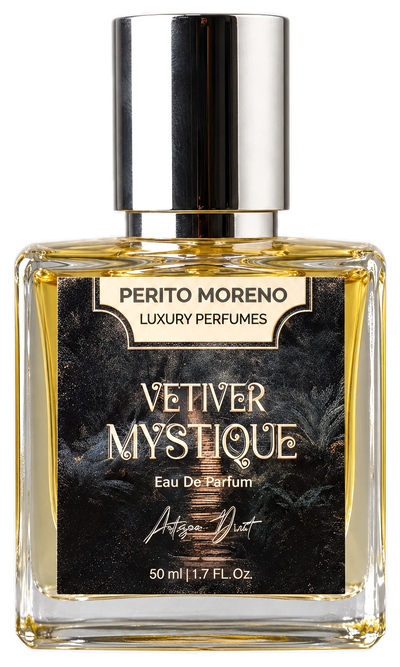
Vetiver Mystique
A ’70s blazer, a turtleneck, smoky vetiver.

Meditation Swipe
Omani frankincense first, then rose.
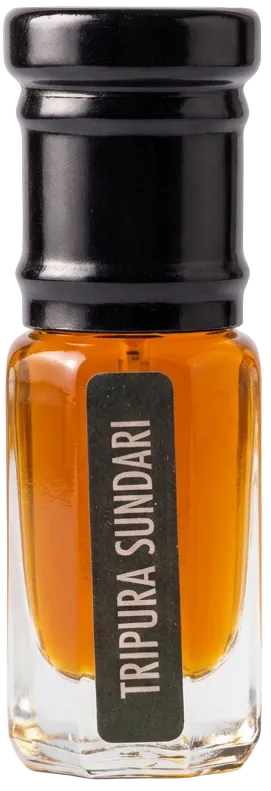
Tripura Sundari
An Offering to the Divine Feminine